
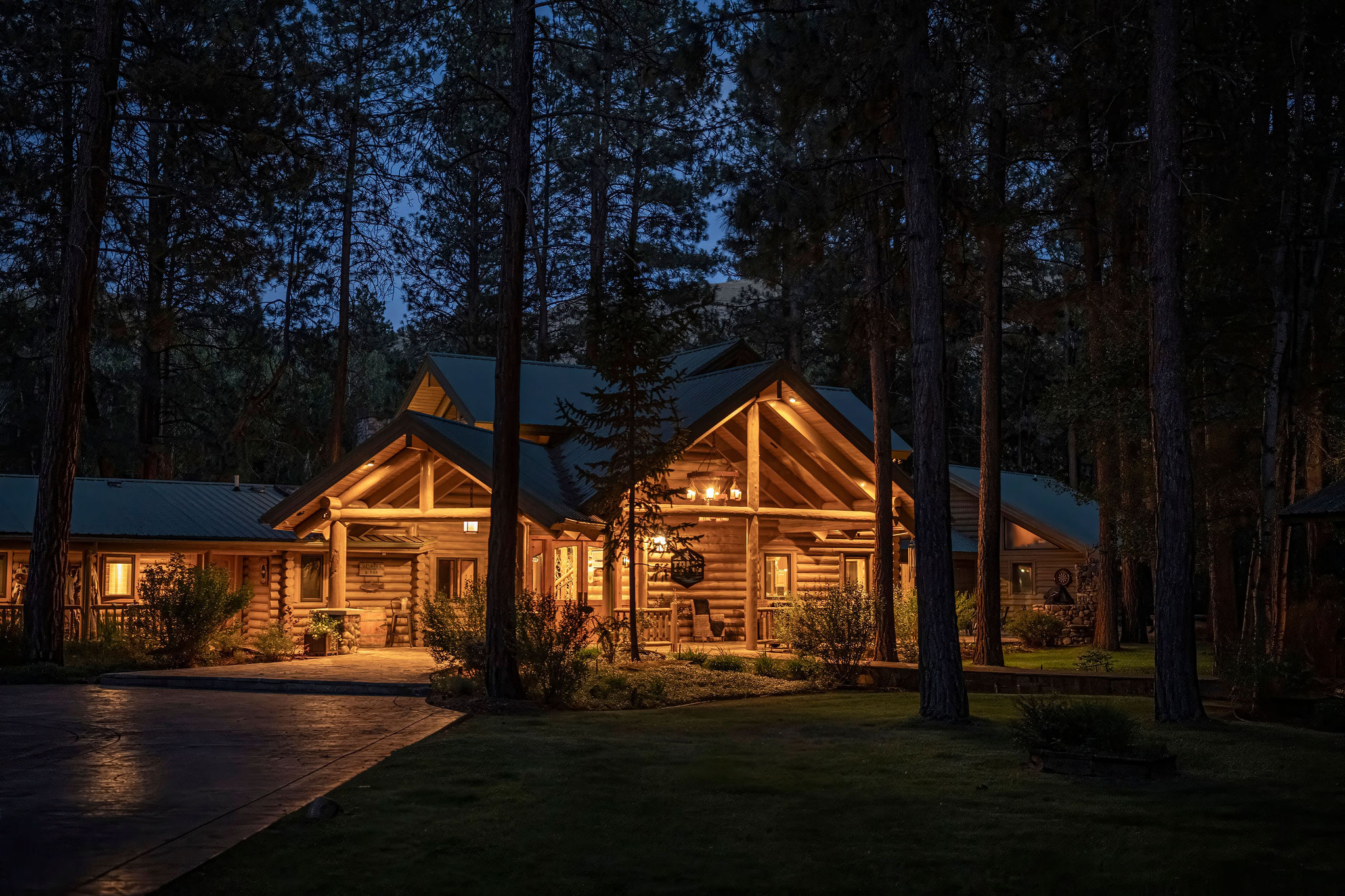
The house sits near Hamilton, close enough to the Bitterroot River that you can hear it from the porch before you can see it. In the morning the light comes down off the mountains slowly, the way it does in a valley that runs north to south, and it finds the windows one at a time. Someone is already up making coffee. Someone else is still asleep down the hall. A child is awake and quiet, watching the water.
Three generations under one roof, and no front desk between them.
If you are reading this, you are probably the one doing the organizing. You have looked at calendars and airports and the ages of everyone involved, and you have thought, plainly, that it is time to get everyone in the same place before another year slips by. Multigenerational trips in Montana tend to start this way, with one person who decides the moment is worth the effort.
This is a piece about what changes when the place is yours alone. Not a lodge with your name on a few rooms, but a single house where the only people moving through the day are the people you brought with you.
The difference is quieter than it sounds and larger than you expect.
Let me walk you through it the way I would tell a friend.
Why Reunions Usually Splinter
Here is the shape most family trips take, whether anyone plans it that way or not.
You book a block of rooms. They end up down different hallways, maybe on different floors. The group texts all day to coordinate. Where are we meeting, did the grandparents find breakfast, is the eight-year-old melting down, who has the car.
You gather in a lobby. There is other people’s luggage there, other people’s conversations, a television nobody is watching. You wait for a table because a party of ten is hard to seat, and when you finally sit, the meal runs on the kitchen’s clock rather than yours.
None of this is anyone’s fault. It is simply the structure. Family gatherings in Montana, or anywhere, tend to splinter along the seams a hotel is built with. Rooms are private, but everything shared is also shared with strangers.
So the family that traveled a long way to be together spends the trip reassembling, over and over, from separate corners. Morning scatter, midday scatter, evening scatter. The reunion becomes a series of brief reunions inside a longer stretch of logistics.
You feel it most in the small moments that never happen. The unhurried second cup of coffee that gets cut short because the room needs to be vacated. The late conversation ends because someone has to walk back to a different building.
It is not that the trip fails. It is that the togetherness you came for keeps getting interrupted by the machinery around it.
That is the problem worth solving. And it is a structural one, which means the fix is structural too.
What It Means to Have the Whole Property
The lodge is the family’s alone.
That is the whole idea, and it is worth sitting with, because it sounds simple and it is not. There is no other group at breakfast. No one you do not know moving through the common rooms. No front desk to check in at, no key cards, no schedule that belongs to a building rather than to you.
A private lodge in Montana changes how a group behaves, and it happens almost immediately, usually within the first hour. People stop performing.
I mean that literally. In a shared space, a family manages the impression it makes on strangers. You quiet the kids. You apologize for the noise. You steer conversations away from the topics families actually need to talk about. You keep half an eye on how the group looks from the outside.
Take the strangers away and that whole layer of effort falls off.
The kids can be loud. That is what kids are. Grandparents can go to bed early without missing anything, because nothing is happening in a lobby they are not part of. The teenager can be a teenager. Someone can cry at the table if the conversation goes somewhere real, and no one has to lower their voice.
You are not checking into anything. You are staying somewhere.
The felt difference is hard to sell and easy to recognize. It is the difference between a group that is visiting a place and a group that has, for a few days, made a place of their own.
The Table That Holds the Trip Together
Every meal is prepared on-site by a private chef, seasonal and rooted in the valley.
I want to be careful here, because the food is worth talking about, but the food is not really the point. The point is what a shared meal does to a family when no one has to manage it.
Think about how a long table works. Three generations rarely gather on purpose. The grandparents are on one rhythm, the parents on another, the kids on a third, and getting all of them in the same room at the same time usually takes someone herding. A meal at the lodge does that herding on its own. The food arrives, everyone drifts toward the table, and there they are, in one room, without anyone having made it happen.
No one drives anywhere. No one splits a check. No one waits on a reservation for their own dinner in their own house.
That last part matters more than it seems. When the meal comes to you, the meal becomes the gathering rather than an errand inside the gathering. The plates get cleared and no one leaves, because there is nowhere to go and no table being turned. The conversation keeps going into the second hour. That second hour is where the trip actually lives.
One practical thing to know early, because it shapes how you plan. Overnight stays are handled through the website. Dinner is arranged separately, by phone. I will lay out the full sequence near the end, but plant that distinction now so it does not surprise you later. The meals are not something you click through a booking flow to reserve.
For now, hold on to the simpler idea. The table is the thing that pulls everyone into one room without anyone organizing it. In a family that scatters easily, that is no small gift.
Days That Flex Across Ages
The hardest part of any group trip is that a group is not one person. It is a range of energy levels wearing the same last name.
Someone wants to be up at six with the light. Someone wants to sleep until nine and ease into the day. Someone wants to be on the water. Someone wants a chair and a book and no plan at all. A rigid itinerary serves none of them and exhausts the person who built it.
The better shape for small group getaways is not a schedule. It is a base. A place everyone leaves from at their own pace and returns to at their own pace, so the day can hold several rhythms at once without anyone feeling left behind or held back.
Slow Mornings
There is a particular quality to a morning when nothing is chasing you.
No checkout time. No breakfast rush to beat. The coffee is made and remade. The light moves across the floor. Outside, the river keeps doing what the river does, which is the closest thing to a clock anyone needs.
Someone reads. Someone stands at the window. Someone talks quietly with a grandparent about nothing in particular, which is often the conversation you remember longest.
A slow morning is the room the rest of the day gets built inside of.
The Middle of the Day, Split by Preference
By midday the group naturally divides, and that is exactly right.
Some head toward the water. Some take a walk. Some stay behind with a book and a chair and the sound of the river.
No one has to choose the same thing. That is the freedom of having the property as your base. The walkers come back. The readers are still there. The grandparents, who may have rested through the warm part of the afternoon, are ready again by the time the others return.
The house holds all of it. People leave and come back on their own tides, and the place stays constant in the middle.
Evenings Around the Fire
The day closes at the fire, and this is where the ages reconvene.
By evening everyone has had their version of the day, and they carry it back to the same room. The one who fished tells about it. The one who walked has something to report. The one who reads all afternoon is the most rested and the most talkative.
There is no reason to leave. No car to catch, no other building to walk to, no reservation across town. The evening simply runs as long as the people in it want it to run.
That is the whole design. Days wide enough for everyone to move through differently, and a table and a fire that pulls them back together at the ends of it.
Why It Matters That It Is This Place
You could gather a family in a lot of places. The reason to do it here has to do with the valley itself.
The Bitterroot Valley runs long and narrow, the Bitterroot Range rising on the west side, the Sapphires on the east, and the river threading down the middle of it all. Hamilton sits in that corridor, a real town in a working valley, not a manufactured version of one. The mountains are close enough to feel and far enough to hold the sky wide open above the valley floor.
That sky is part of the reason to come. On a clear night near Hamilton, away from the light of a city, the stars carry a weight you forget they can have.
For a gathering that happens once in a long while, somewhere specific matters more than somewhere convenient. A place that could be anywhere leaves you with photos that could be from anywhere. The Bitterroot leaves you with a particular river, a particular light coming off particular mountains, a particular quiet.
Hamilton Montana lodging in this part of the valley puts you inside that geography rather than beside it. The river is not a view you drive to. It is the sound outside the window in the morning.
When the family talks about this trip in ten years, they will not say the amenities were good. They will say something about the river, or the light, or the night sky over the valley. Place is what memory holds onto. The Bitterroot gives memory something worth holding.
The Questions Worth Asking Before You Commit
A trip like this deserves honest questions. Here are the ones people actually ask, answered the way a friend would answer them.
Is Hamilton Too Far Out of the Way
The worry usually comes in two parts. Is it hard to get to, and once you are there, is there anything to do.
On the first, Hamilton is a real town in a settled valley, not the edge of the map. On the second, turn the question over. The reason the valley feels private is the same reason it is not sitting next to a freeway interchange. The distance is not a cost you pay for the quiet. The distance is where the quiet comes from.
And “nothing to do” tends to mean “nothing scheduled,” which is often the point. The river, the mountains, the long meals, the fire. For a family that spends most of the year overbooked, a place that does not fill every hour is not empty. It is a room.
Does a Non-Hotel Format Actually Work for a Group
If you have mostly stayed in hotels, a private lodge can feel unfamiliar before you have tried it. Where is the front desk? Who do you call? What if you need something?
The honest answer is that the absence of hotel machinery is the feature, not the gap. A hotel has a lobby and a front desk because it is serving many groups at once and has to route them. When the place is yours alone, that apparatus has nothing to do. You are not one reservation among many. You are the only one.
For a group, this works better, not worse. There is no coordinating across floors, no meeting in a shared space, no negotiating for a table. The whole point of the format is that the building gets out of the way and lets the family be a family.
Whether It Is Worth It
The cost question is fair, and I will not wave it away, though I will keep it in general terms because rates move with the season.
Here is the frame that helps. A resort, by its structure, sells you a portion of a shared place. Rooms here, meals there, common spaces you share with strangers. What you are weighing at a private lodge is different in kind. You are not paying for nicer rooms. You are paying for the whole place, uninterrupted, and for time together without logistics stitched through it.
That is something a shared-format property cannot give you at any price, because it is built to serve more than one group at once. The value is not in the polish. It is in what having the place to yourselves makes possible. The second hour at the table, the morning that does not end at checkout, the family that does not have to reassemble from separate corners a dozen times a day.
Whether that is worth it depends on how rare it is for your people to be in one room. For most families, that rarity is exactly the point.
How to Plan and Book a Private Stay
Planning a private group stay here is simpler than planning the usual scattered version, because there are fewer moving parts to coordinate. Here is the sensible order.
First, settle the dates with your group. With everyone under one roof, you are choosing a window for the whole family at once rather than juggling separate reservations, which is its own small relief.
Second, book the overnight stay through the website. Overnight stays are handled online. That is where availability lives and where the reservation is made.
Third, and separately, call to arrange dinner. Dinner reservations are by phone at +1 (406) 360-2128 and cannot be booked online. This is the one distinction worth keeping straight, because it is easy to assume everything runs through the same booking flow. It does not. The stay is booked on the website. The meals are arranged by phone. Two steps, not one.
A short phone call also lets you talk through the shape of your meals in a way a form never could, which for a group spanning several ages and appetites is genuinely useful.
That is the whole sequence. Choose the dates, book the stay online, then call +1 (406) 360-2128 for dinner. Calm and short, the way the trip itself should be.
Time That Stays Whole
Come back to the morning we started with.
The house near Hamilton, the river outside, the light coming down off the mountains and finding the windows one at a time. Coffee is already made. Someone awake, someone asleep, a child watching the water. Later the long table, and after that the fire, and the family that traveled a long way sitting in one room with no one between them.
The amenities were never the point. Amenities are what you compare when the real thing is missing.
The real thing is the uninterrupted time. Three generations in the same place, moving at their own pace through days wide enough to hold all of them, gathering at the table and the fire without anyone herding, without a lobby, without strangers, without the trip splintering into logistics.
That is what the whole property alone gives you. Time that stays whole.
See what is open this season for your overnight stay through the website, and when you are ready to plan your meals, call our phone.
The river will be there in the morning.